
Horse Nutrition: Regular vs. Orthomolecular - Do You Know the Difference?

How do you view your horse's feed trough?

As a passionate horse owner, you're constantly striving to optimize your animal's health and well-being . The feed trough is the key to this: what we feed our horses determines their performance, resistance, and quality of life.
Yet, there are two fundamentally different schools of thought regarding horse nutrition. Let's analyze the difference between the conventional view and the orthomolecular view . This understanding is crucial for determining whether your horse is simply not sick , or whether it can truly thrive.
Regular vs. orthomolecular: highlighted
The regular point of view – the basics
The standard approach to horse nutrition is the most common. This approach is often adopted by major feed manufacturers and focuses on meeting the horse's absolute basic needs.
The focus here is on meeting the Recommended Daily Allowance (RDA) . This is the minimum requirement to prevent acute deficiencies and disease. The average values for energy, protein, and basic vitamins are considered for a horse of a certain weight and working level.
The goal is simple: ensure that the horse does not become ill due to an acute nutritional deficiency.
Synthetic vitamins and minerals are often used because they are inexpensive and can be added to concentrated feed in fixed, precise doses. The mainstream approach, therefore, aims for an average, functional diet that covers the population's basic needs.
The orthomolecular view: Optimization at the cellular level
The orthomolecular approach takes things a step further. The term itself, "orthomolecular," literally means "the right molecules." It's a holistic approach that no longer focuses on the minimum RDA, but on the optimal, individual nutrient concentration .
The primary goal here is not disease prevention , but the promotion of maximum vitality and health . We achieve this by optimally supporting the body in its complex biochemical processes and its self-healing capacity.
The quality of the building materials is essential here. Preference is given to natural sources and nutrients with high bioavailability (think organically bound minerals), as these are demonstrably better absorbed and utilized by the horse's body.
Furthermore, the orthomolecular perspective states that horses, as herbivores with sensitive digestive systems , do not require grains . Grains (such as oats, barley, or corn) often contain a lot of starch and sugars , which can disrupt gut flora and the pH of the large intestine. (See post: 5 Small Dietary Adjustments) . Therefore, an orthomolecular ration is typically grain-free to maximize gut health and cellular nutrient uptake . This approach is, by definition, personalized .
Practical example: The case of poor coat quality
Let's illustrate this crucial difference with a concrete problem. Imagine your horse is shedding poorly or is sluggish , has a dull coat , and is itchy. Most of you recognize this, right?
The Regular Response
Within the regular view it is often concluded that the horse needs a general improvement in condition.
It is recommended to add a standard oil (e.g. linseed oil) for shine, and possibly a general coat supplement.
The coat may become slightly shinier due to the extra fats, but the difficult shedding and the itching often persist because the deeper, structural deficiencies at a cellular level are not addressed.
The Orthomolecular Reaction
The orthomolecular specialist begins with a nutrient profile analysis to identify the internal imbalance. The reasoning is that a dull coat and slow shedding are a direct reflection of cell metabolism and hormonal activity .
The analysis can reveal that the problems at the cellular level are caused by an imbalance and/or a deficiency of specific minerals and/or essential amino acids . These nutrients are building blocks for skin tissue and coat structure and play a crucial role in the hormonal process that triggers shedding.
The solution is a personalized plan formulated with highly bioavailable nutrients in optimal, therapeutic doses . These are precisely tailored to the unique deficiencies and imbalances revealed by the analysis. The result is faster, more efficient shedding and a deep, healthy shine, because the cellular structure and hormonal system are fundamentally supported.
See for yourself the transformation of Finesse - Annemie M. (owner)

Finesse in 2023: before orthomolecular nutritional advice
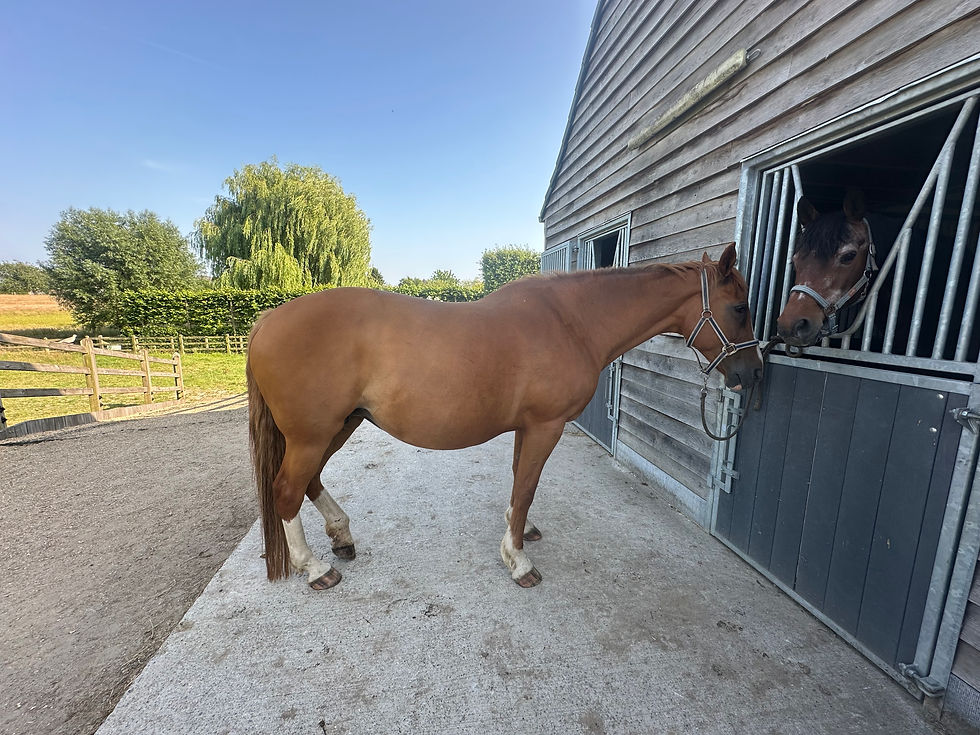
Finesse in 2024:
9 months after starting orthomolecular nutritional advice
The Holistic Effect
The orthomolecular approach never focuses on a single symptom. Because the solution focuses on optimizing the biochemistry in every cell of the horse, the benefits are evident everywhere.
Among other things:
Stronger hoof quality: By correcting the mineral balance and the absorption of building materials, the production of hoof horn is sustainably supported.
Optimal topline: The improved absorption of essential amino acids and proteins from the gut is directly converted into better muscle building and a stronger topline.
More vitality and resistance: A healthy, well-nourished cell environment and strong intestinal health lead to an optimally functioning immune system.
It's a domino effect where the whole system benefits from having the 'right molecules' in the right quantities.
Regular vs. Orthomolecular: The Big Difference at a glance
Aspect | Regular Vision | Orthomolecular Vision |
Objective | Preventing acute deficiencies/diseases. | Optimizing all bodily functions. |
Nutrient level | Meeting the Minimum Dietary Requirements (RDA) . | Striving for the Optimal (Individual) Needs . |
Approximation | Standard ration for the population. | Personalized and individual. |
Source Nutrition | Synthetic nutrients (often). | Natural and highly bioavailable nutrients. |
Starting point | Average healthy horse. | Horse at the cellular level and biochemistry. |
Regular vs. orthomolecular:
Conclusion: From minimum to maximum
The question isn't whether conventional nutrition is "bad"; it provides a safe foundation. However, the orthomolecular approach, if grain-free , offers a path to a higher level of health, resistance, and performance .
An orthomolecular approach to nutrition is the step from prevention to flourishing . It is the recognition that the horse is more than just an average horse: it is a unique biochemical system that, when fed the right molecules in the right concentration —and free from unnecessary ballast such as grains —is capable of maximum health and lasting improvement.
For horses with chronic problems, vague complaints or that need to perform at the highest level, this personalized, cell-oriented approach is often the key to unlocking their full potential.
If you have any questions, please contact us!
Join the conversation!
Thank you for reading our latest blog post! We strive to create content that is truly valuable to our readers.
Want to be the first to know? Subscribe to our blog! You'll receive all new content directly in your inbox and never miss an update.
What topic would YOU like to know more about?
Let us know in the comments.
YOUR suggestions help us write an even more relevant blog next time.

Comments